
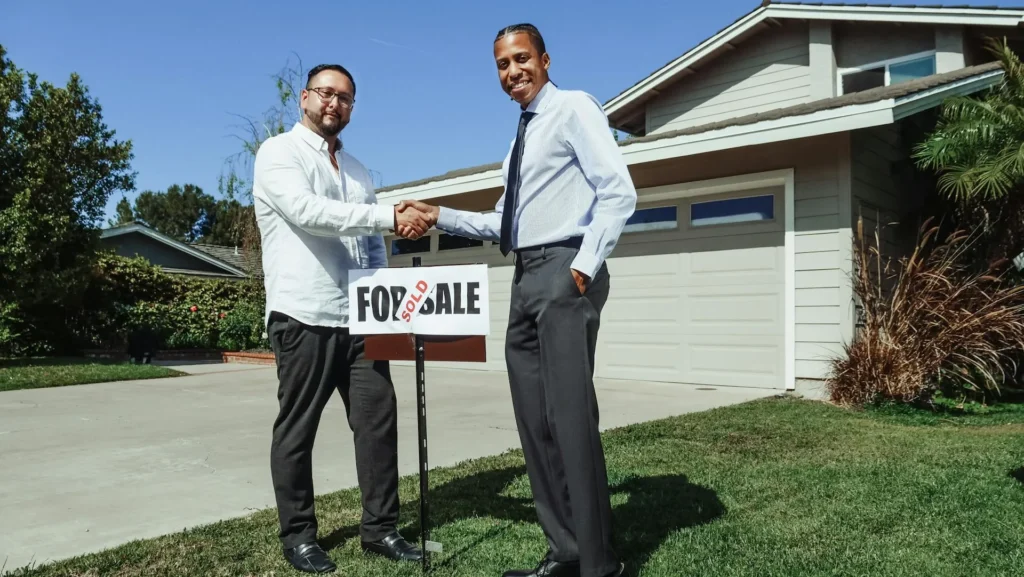
Choosing a real estate agent to sell your home is a decision about who will manage the campaign, negotiate with buyers and help you reach an acceptable result. The right agent should be able to explain their price assessment, show relevant recent sales and give you a clear written account of their services and costs.
Start by interviewing at least three candidates. This gives you a useful comparison of pricing, strategy and service; it is also the approach recommended by NSW Fair Trading, which suggests sellers talk to at least three agents before signing an agency agreement.
These tips will help Australian sellers build a shortlist, ask better questions and compare proposals before signing. Appointment forms and legal requirements vary between states and territories, so use the regulator guidance for the property’s location.
1. Define what a successful sale means for you
Before meeting agents, write down your priorities. These might include the price you need to achieve, a preferred settlement date, the maximum marketing budget and how much preparation you can manage.
Explain any practical constraints, such as a tenant in the property, shift work, pets, a family move or the need to coordinate another purchase. Ask each candidate how these circumstances would shape the campaign.
Distinguish your financial target from the market evidence. An agent needs to understand the amount you hope to receive, but your next purchase budget does not determine what buyers will pay. This conversation is useful for assessing whether the agent can give candid advice when your expectations and the evidence differ.
2. Research agents who sell homes similar to yours
Look for experience with your property type, price bracket and local buyer market. Selling a family house, a tenanted apartment or an acreage property can involve different buyers and different questions.
Ask candidates for a selection of comparable sales they personally handled. Include successful campaigns and one that proved difficult. Check the property details, sale dates and available sold prices, then ask what the agent contributed to each result.
Useful questions include:
- How many similar properties have you sold in this area recently?
- Which competing homes would buyers consider alongside mine?
- What objections are buyers raising about this type of property?
- What did you change when a recent campaign was not working?
Use Property Research Hub’s property data and pricing tools to find sold-price information and suburb research resources. Take account of land size, condition, layout, parking and location when comparing homes.
Current market conditions should also shape the conversation. Our Australian property market outlook covers where values, listings and selling times currently sit.
3. Check licensing and the people responsible for your sale
Confirm that the agency and the person handling your sale hold the appropriate licence, registration or authority for their role. Check the official register for your state or territory and review any publicly recorded restrictions or disciplinary information.
The rules differ by role and jurisdiction. In Victoria, anyone in the business of buying, selling or leasing property on behalf of another person must either hold an estate agent’s licence or be employed and authorised by a licensed estate agent as an agent’s representative. An agent’s representative must have written authority to act, and the licensed estate agent is responsible for their professional conduct. Consumer Affairs Victoria publishes a public register of licensed estate agents and agent’s representatives. Consumer Affairs Victoria guidance.
Ask who is responsible if a problem arises, who supervises the campaign and whether the agency has relevant professional indemnity insurance. A professional association membership or industry award can be additional background, but verify the legal authority to perform the work separately.
4. Ask for evidence behind the proposed selling price
Request a written appraisal explaining the comparable sales, the differences between those properties and yours, and the assumptions behind the recommended price range.
Ask the agent to separate three things: their estimated sale price, the proposed advertised price or range, and your own asking price or auction reserve. These serve different purposes. The legal rules around price representations depend on the jurisdiction.
An appraisal is an estimate, not a guaranteed result. Test the reasoning by asking what evidence would lead the agent to revise it and how they would discuss a change with you.
Two jurisdictional examples show the standard of evidence expected:
- Queensland: an agent suggesting an asking price must prepare a comparative market analysis using at least three suitable sales within the prescribed distance and timeframe. If they cannot find three properties meeting the criteria, they must give their market advice in writing and justify how they reached their opinion. Queensland guidance on appointing an agent.
- Victoria: the agent’s estimated selling price must be reasonable, must take into account the three most comparable properties, and must be recorded in the sales authority as either a single price or a price range of no more than 10%. It is illegal for an agent to deliberately give a high estimated selling price to win your business. Consumer Affairs Victoria guidance.
Be cautious about a substantially higher appraisal that relies on weak comparisons. Ask for a defensible explanation before making it the reason you appoint that agent.
5. Observe how they handle buyers
Attend an open home or auction run by an agent on your shortlist. Observe how the property is presented and whether the agent can answer ordinary questions clearly. Be transparent about why you are attending if asked.
Notice whether buyers receive useful information, how the agent handles questions they cannot answer immediately and whether the inspection feels organised. Consider how well that approach would represent your property.
Ask to see examples of listing copy, floorplans, photography and buyer information packs. Check the accuracy and clarity of the material. You are looking for evidence of the service your buyers are likely to receive throughout the campaign.
6. Find out who will actually do the work
The person delivering the listing presentation may work with a larger team. Establish who will write the advertisement, attend inspections, return enquiries, negotiate offers and give you updates.
Ask how many active campaigns the lead agent manages and how the team covers leave or illness. A busy agent may have excellent support, so assess their capacity rather than assuming listing volume tells the whole story.
Request a sample weekly report. A useful report explains enquiry quality, inspection feedback, repeat visits, offers and recommended next steps. Website views alone give limited insight into whether buyers are moving towards a purchase.
Agree on the reporting schedule and your preferred contact method. For time-sensitive offers, establish how the agent will reach you and who can make decisions on your behalf, if anyone.
7. Ask why the proposed sale method suits your property
An agent should explain their recommendation for auction, private treaty or another permitted sale method using current buyer behaviour and your circumstances.
For an auction proposal, ask about the likely depth of buyer competition, the auctioneer’s experience, campaign costs and the plan if the property passes in. For private treaty, ask how the asking price, enquiry follow-up and offer process will be managed.
The choice also affects the buyer’s position, which affects your pool of buyers. Cooling-off rights for the buyer differ by state and by sale method — in several states there is no cooling-off period on a property bought at auction. Confirm what applies where your property is located.
An off-market campaign may appeal where privacy or limited disruption matters. Ask how many suitable buyers can realistically be reached and when the agent would recommend moving to public advertising. Limited exposure can make it harder to assess the full range of buyer interest.
Discuss the legal and practical implications of each method with your solicitor or conveyancer before committing to a strategy.
8. Request an itemised marketing proposal
Ask for a written plan showing what will be purchased, when it will run and why it is suitable for your likely buyers. Separate essential presentation work from optional upgrades.
The proposal should identify relevant costs such as photography, floorplans, online listings, signage, auction services and styling. Ask who approves additional spending and what happens to prepaid amounts if the campaign changes.
Queensland’s consumer guidance emphasises advance agreement to expenses and an explanation of how marketing money will be spent. Queensland commission and expense guidance.
Be aware that in some states you will still owe authorised marketing costs even if the property does not sell. Consumer Affairs Victoria notes that sellers can seek to negotiate a “no sale, no fee” arrangement in the sales authority, and that all expenses are negotiable and must be recorded in it.
Ask how each item will help reach a likely buyer. A video, premium listing or print advertisement may be useful, but the agent should explain its purpose for your property. Also clarify whether photography can be reused if you change agencies; do not assume you own unrestricted rights to commissioned images.
9. Compare commission and total selling costs
Request written quotes on a consistent basis, including GST, marketing expenses and any additional fees. Ask how commission is calculated and exactly when it becomes payable.
Commission rates are not set by government in any state or territory and are negotiable. Rates vary by location, property value and the services included, so treat any published “average” as a starting point for discussion rather than a benchmark you should expect to be offered.
Consider this hypothetical comparison for a $900,000 sale:
| Cost item | Agent A | Agent B |
|---|---|---|
| Commission rate including GST | 2.0% | 2.5% |
| Commission in dollars | $18,000 | $22,500 |
| Agreed marketing including GST | $5,000 | $3,000 |
| Total of these agent costs | $23,000 | $25,500 |
| Sale proceeds after these costs | $877,000 | $874,500 |
Illustration only. These are invented quotes, not market averages. Other costs, loan repayments and any tax are excluded. Both columns assume the same sale price.
Use the comparison to understand what the extra $2,500 would buy. Assess the supporting evidence for better service or a stronger campaign; a higher fee does not establish that the agent will achieve a higher price.
For tiered or incentive commissions, ask for dollar examples at several sale prices. Clarify whether a higher rate applies only above a threshold or to the entire sale price — the difference can be thousands of dollars, and Consumer Affairs Victoria specifically warns that sellers and agents can interpret a commission scale differently. Negotiate before signing and ensure the final agreement records what you accepted.
10. Examine negotiation skills and conflicts of interest
Ask candidates to talk through an actual negotiation, with client details removed. What was the buyer’s initial position? How did the agent assess the buyer’s capacity and interest? What information did the seller receive before deciding?
Then discuss a scenario involving a higher conditional offer and a lower offer with fewer conditions. A capable agent should recognise that price, finance conditions, settlement timing and the risk of the sale failing can all matter.
Ask about referral payments, relationships with recommended suppliers and any connection to a potential buyer. Agent comparison services may be paid by participating agents, so establish who pays the service and how candidates are selected. The NSW Government discusses these arrangements in its guidance on referral services and vendor advocates.
Rebates are treated strictly in some states. In Victoria, an agent must pass on to you any rebate or discount they receive, such as for bulk advertising, and it is illegal for them to keep it even if you agree. The amount of any rebate must be stated in the sales authority.
Request relevant disclosures in writing and obtain independent advice about conflicts that could affect the sale.
11. Read the appointment agreement before signing
Get a copy early enough to review it without pressure. Focus on the appointment period, exclusivity, termination process, spending authority and circumstances that trigger commission.
Ask what happens if you find a buyer yourself, change agents, withdraw the property or sign a contract that later fails to settle. Confirm whether obligations continue after the appointment ends. These details depend on the agreement and applicable law.
Three jurisdictional examples show why local checks matter:
- New South Wales: the Property and Stock Agents Act 2002 provides a cooling-off period for agency agreements covering residential property or rural land. It starts when the agreement is signed and ends at 5 pm on the next day that is a business day or a Saturday. You can revoke the agreement in writing during that window at no cost, the period can be extended, and it can be waived by signing a separate approved waiver form before you sign the agreement. NSW agency agreement guidance.
- Victoria: there is no cooling-off period after signing a sales authority. Once signed, you generally cannot cancel during the authority period unless the agent agrees. If no period is stated on an exclusive authority, the default is 30 days after the auction date, or 60 days after signing for a private sale. Review the authority before committing. Victorian sales authority guidance.
- Queensland: residential appointments use Form 6, and open, sole and exclusive appointments have different consequences. If you continue with another agent after incorrectly cancelling an appointment, you may have to pay two commissions. Check how the appointment ends before engaging another agent. Queensland appointment guidance.
Have a solicitor review unclear or significant obligations. Promises made in the presentation should appear in the written agreement where appropriate.
12. Check preparation and disclosure arrangements
A sale can be delayed by missing documents or unresolved questions about the property. Ask how the agent will work with your solicitor or conveyancer to prepare the contract and required disclosures.
For example, Queensland’s seller disclosure scheme commenced on 1 August 2025 under the Property Law Act 2023. Sellers must give the buyer a disclosure statement (Form 2) with prescribed certificates attached before the buyer signs the contract. If the seller does not comply, the buyer may be able to terminate the contract, subject to the scheme’s requirements and exceptions. Queensland seller disclosure guidance.
Other states have their own disclosure regimes — for example, the Section 32 vendor’s statement in Victoria — so confirm what applies to your property with your legal adviser.
Discuss any tenancy, owners corporation matters, alterations, notices or other issues with your legal adviser. The agent should support an accurate campaign and direct specialist questions to the appropriate professional.
You can also use our suburb research guide to understand the local information buyers may investigate, including planning, hazards and amenity. Verify factual claims before including them in advertising.
A practical scorecard for comparing selling agents
After each interview, rate the agent from one to five against the same criteria. Use written proposals, observed work and references to support the scores.
| Criterion | Suggested weight |
|---|---|
| Relevant local sales and buyer knowledge | 25% |
| Quality of pricing evidence | 20% |
| Marketing strategy and execution | 15% |
| Negotiation approach | 15% |
| Communication and available capacity | 10% |
| Fees and expense transparency | 10% |
| Appointment terms and accountability | 5% |
This is an editorial comparison aid, not a validated measure of performance. Adjust the weights to your priorities. For each criterion, divide the rating by five and multiply by its weight; add the results for a score out of 100.
Contact recent sellers before making the final decision. Ask whether the agent followed through on their commitments, explained changes promptly and handled problems constructively. Treat a serious licensing, integrity or contract concern as a reason to resolve the issue before proceeding, regardless of the numerical score.
Common questions about choosing a selling agent
How many agents should I interview?
Three is a useful starting point, and it is the number NSW Fair Trading suggests. Give each the same information and ask for comparable written proposals. Expand the shortlist if none can demonstrate the experience or service you need.
Should I choose the agent with the highest appraisal?
Evaluate the evidence behind the figure. Ask for comparable sales, adjustments for your property’s features and the proposed campaign. An optimistic estimate alone gives little assurance about the eventual result, and Consumer Affairs Victoria specifically advises against choosing an agent just because they gave the highest estimated selling price.
Are real estate agent fees negotiable?
Yes. Commission is not set by government in any state or territory. Discuss commission, marketing and other charges before signing. Request the complete cost in dollars as well as any percentage, and check the applicable state or territory rules and the final written terms.
Can I change agents if I am unhappy?
Possibly, but check the appointment period, exclusivity, notice requirements and continuing commission obligations first. Changing agencies before properly ending the previous agreement can create competing claims — in Queensland, for example, this can result in paying two commissions. Seek legal advice before signing a replacement appointment if the position is unclear.
Do I have a cooling-off period after signing with an agent?
It depends on the state. New South Wales provides a short statutory cooling-off period for residential agency agreements, which can be waived. Victoria provides none at all for a sales authority. Check the rules for your property’s location before you sign, and do not rely on being able to change your mind afterwards.
This article provides general information only and is not legal, financial or property advice. Requirements vary across Australian states and territories. Obtain advice appropriate to your property, appointment agreement and sale circumstances.