

When most people research a property, they focus on sold prices, listings, school catchments, and recent market activity.
Those checks are important. But they are not the whole picture.
Strong property research also means looking at the issues that are easier to miss, such as walkability, nearby power lines, industrial emissions, and underground infrastructure constraints.
At Property Research Hub, we believe these lesser-known checks can make a meaningful difference to the quality of your real estate market research.
For 1st home buyers, investors, and owner-occupiers alike, these tools can help uncover lifestyle factors, practical limitations, and resale considerations that may not be obvious from a listing alone.
In this guide, we highlight five lesser-known property research tools in Australia that deserve more attention:
- Microburbs
- Walk Score
- Electricity Transmission Lines
- National Pollutant Facilities
- Before You Dig Australia
1. Microburbs

Microburbs is a suburb research platform that goes beyond basic pricing data.
It helps users compare suburbs across a wider range of factors, including convenience, safety, lifestyle, communications, planning activity, and local property trends.
This matters because many buyers focus too heavily on headline prices without properly assessing the broader suburb context.
A suburb may look attractive based on price alone, but the deeper picture can change once you consider practical amenity, infrastructure, community profile, and planning activity.
Microburbs can be especially useful during the early stage of property research when you are trying to compare multiple suburbs and narrow down a shortlist.
For 1st home buyers, it can help simplify the suburb comparison process.
For investors, it can provide a broader view of neighbourhood appeal beyond median value trends.
The best way to use Microburbs is as a screening tool.
It can help you identify patterns and ask better questions, but important findings should still be verified through official or primary sources.
2. Walk Score
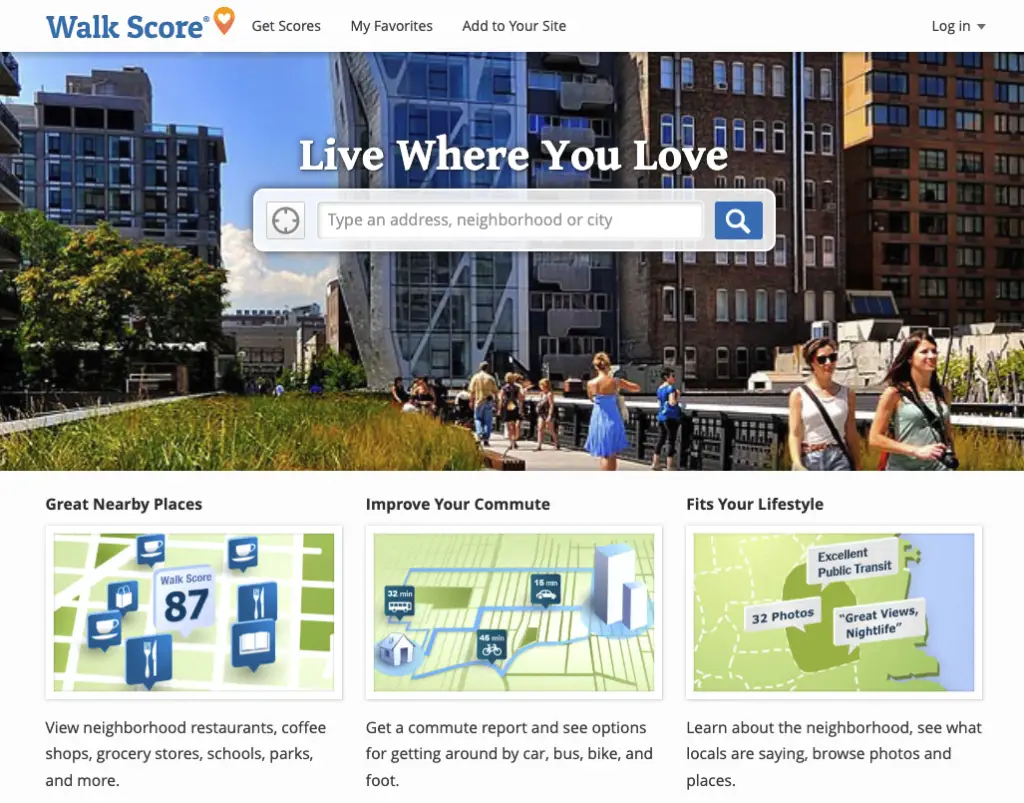
Walk Score is a useful tool for understanding how walkable an address is.
It helps buyers assess how easily a property connects to everyday amenities such as shops, cafés, parks, schools, and public transport.
This is important because walkability influences both lifestyle and convenience.
A property with stronger walkability may reduce car dependence, improve day-to-day ease of living, and appeal more strongly to future buyers or tenants.
That makes it a valuable part of real estate market research, especially in urban and middle-ring suburbs where convenience often drives demand.
For buyers comparing two similar properties, walkability can be a meaningful point of difference.
A home with better access to daily essentials may offer stronger practical value, even when the purchase price is similar.
Walk Score should not replace visiting the property in person.
But it is a useful research tool for comparing addresses and understanding how well a location supports daily life.
3. Electricity Transmission Lines
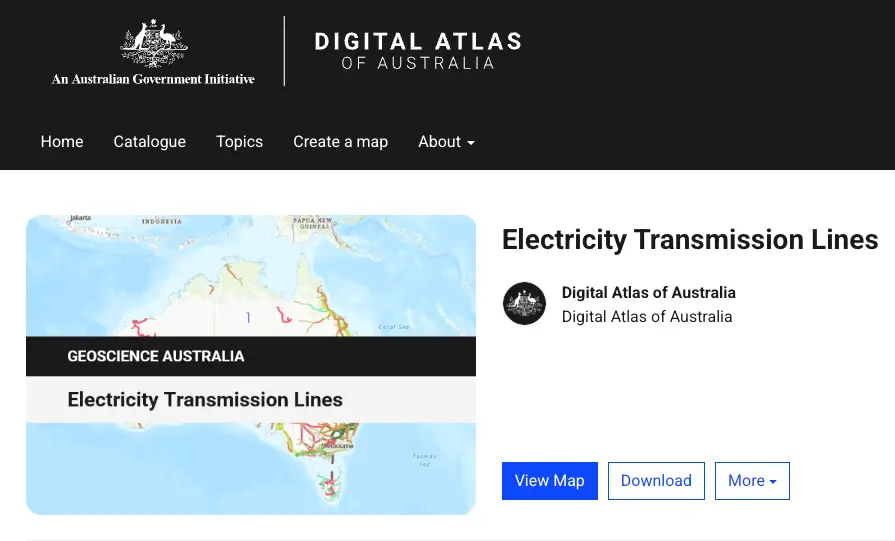
Checking for nearby electricity transmission lines is one of the most overlooked parts of property due diligence.
Many buyers only notice large overhead lines during an inspection, and by then they may already be emotionally invested in the property.
This check matters for two reasons.
The first is perception.
While current research does not clearly establish safety risks for people living near power lines at typical residential exposure levels, some buyers are still concerned about living close to high-voltage infrastructure.
The second is marketability.
Even where a buyer is personally comfortable with the location, future buyers may still see nearby power lines as a negative because of visual impact, uncertainty, or perceived health concerns.
That means the issue is often not just about science. It is also about resale appeal.
Properties close to overhead transmission lines can be less attractive to part of the buyer pool, and that can affect value, negotiation strength, and long-term marketability.
For that reason, electricity transmission line checks should form part of a broader property research process.
They can help buyers think not only about personal comfort, but also about future resale sensitivity.
4. National Pollutant Facilities
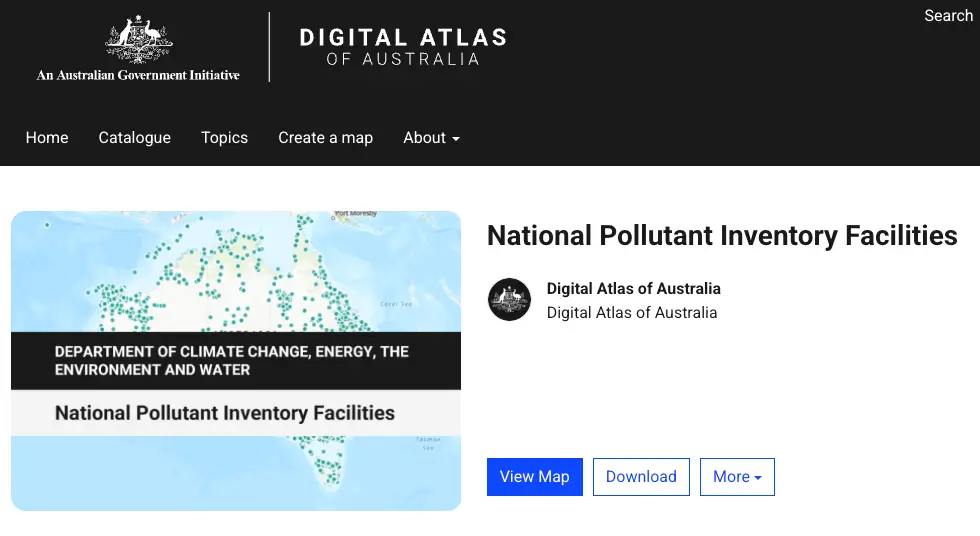
Another valuable but lesser-known property research check is whether a suburb or property sits near pollutant-reporting industrial facilities.
This kind of research can help buyers understand more about the surrounding land-use environment.
That does not automatically mean a property near a reporting facility is unsafe or unsuitable.
However, it may highlight the need for deeper investigation into nearby industrial activity, emissions, odour issues, environmental concerns, or planning context.
This matters because many buyers focus on the house itself and do not properly assess the surrounding industrial setting.
For families, long-term owner-occupiers, and investors, that can be a missed opportunity to identify a factor that may influence liveability or future buyer perception.
This kind of screening is particularly useful when assessing properties near industrial, commercial, logistics, or mixed-use areas.
It helps broaden your real estate market research beyond the dwelling and into the wider context of the location.
5. Before You Dig Australia
Before You Dig Australia, now known as BYDA, is one of the most practical tools on this list.
Most people associate it with excavation and safety.
But it is also highly relevant to property buyers who plan to improve a property after settlement.
If you are buying a property because you want to add a pool, install fencing, widen a driveway, landscape extensively, or carry out excavation works, underground assets can affect what is practical, safe, and affordable.
That is why this check matters.
A property may appear perfect for future improvements, but underground utilities or infrastructure may complicate those plans or increase the cost of the work.
For buyers with renovation or landscaping intentions, BYDA can therefore be a very useful part of pre-purchase thinking.
It helps highlight whether a property may have hidden constraints that are not obvious from the title, listing photos, or surface inspection.
How to use these tools together
These tools are most useful when they are combined into a wider due diligence process.
A practical approach may look like this:
Start with Microburbs to compare suburbs and identify broad differences in convenience, safety, and local conditions.
Use Walk Score to understand how well a property connects to everyday amenities.
Check electricity transmission lines if the property is near visible overhead infrastructure or if resale sensitivity is a concern.
Review national pollutant facilities where industrial or commercial uses are nearby.
Use Before You Dig Australia when future excavation, fencing, landscaping, or other ground works are likely.
This layered approach supports better property research because it helps you move beyond prices and photos.
It adds important context around lifestyle, infrastructure, future constraints, and buyer perception.
Final thoughts
The best property decisions are rarely made from one data source alone.
Strong real estate market research means looking at the broader picture.
That includes suburb quality, practical convenience, visible and hidden infrastructure, surrounding land uses, and the factors that may affect long-term value or liveability.
For 1st home buyers in particular, these lesser-known tools can help reduce uncertainty and uncover issues that might otherwise be missed.
At Property Research Hub, we believe better research leads to better decisions.
These are exactly the kinds of tools that can help buyers approach the process with more confidence and insight.
IMPORTANT: This website is a directory of external property research tools. We do not provide, control, or verify these third-party resources. Information is for general guidance only and does not replace professional advice. Read our Disclaimer.